Spain's Digital Nomad Visa in 2026: A Tax Dream for Workers, a Compliance Risk for Employers
Quick Summary
Quick Summary: An analysis of Spain’s 2026 Digital Nomad Visa, focusing on the Beckhams Law application and the permanent establishment risk for employers.
In 2026, Spain's Digital Nomad Visa (DNV) has become one of the most talked-about ways for remote workers to get residency. It is now at the top of the European nomad hierarchy, especially for Americans and Britons. The answer is simple: Spain quietly opened up the "Beckham Law" tax system to more people, turning what was once a small benefit for expats into a big draw for professionals who move around the world.
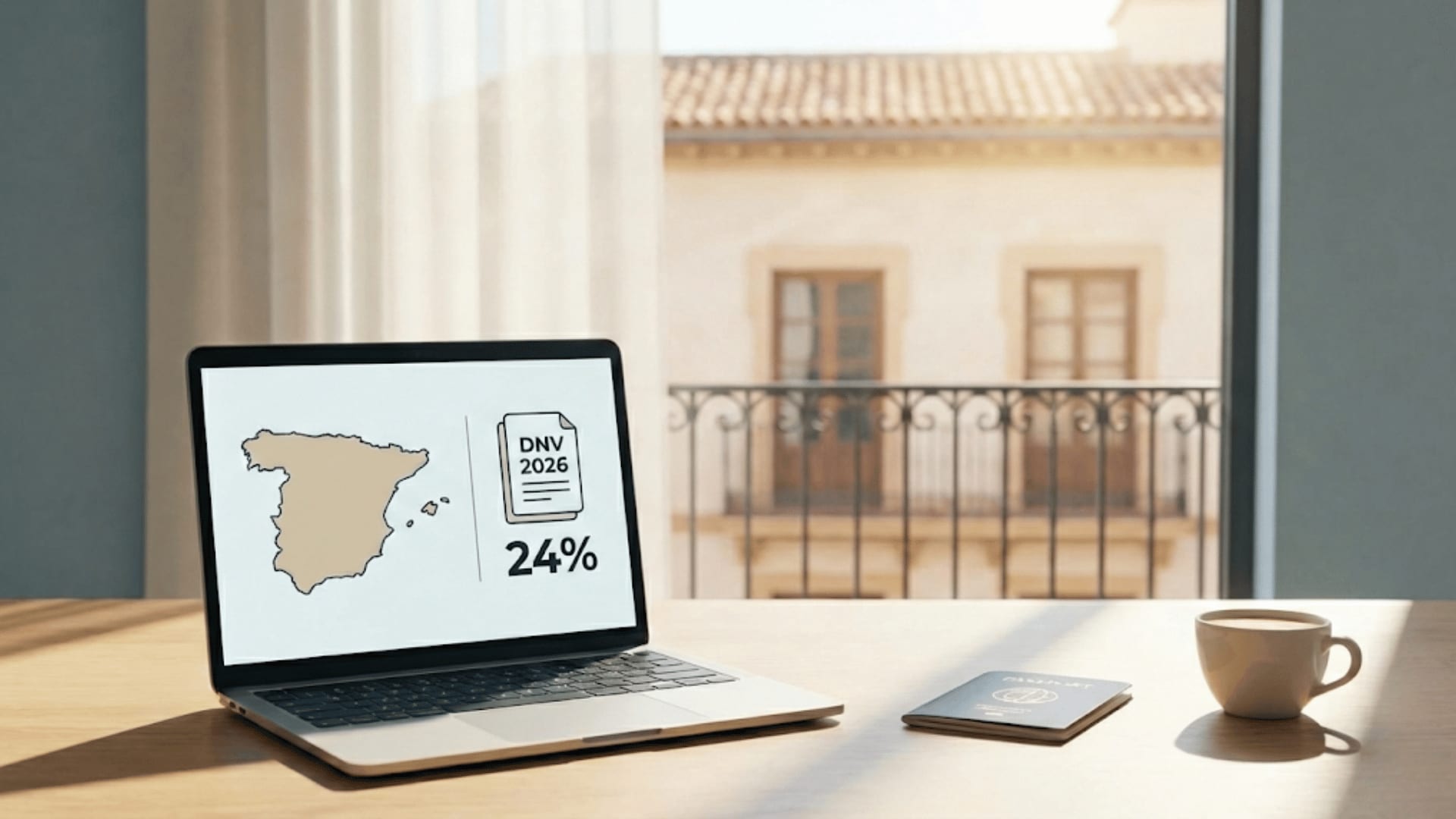
The offer looks great on paper. Digital nomads who meet the requirements can choose to pay a flat 24% income tax on Spanish-sourced employment income, avoid wealth tax in most cases, and—most importantly—avoid Spanish taxes on foreign-sourced capital gains. The regime feels more like the UAE's zero-tax story than the traditional tax burden in continental Europe because Spain's regular progressive income tax rates can go as high as 47%.
But by 2026, the difference between theory and practice will be too big to ignore.
The Actual Cost of the 24% Flat Tax
There are real benefits to the Beckham Law, but there are also real problems with it. In theory, nomads who meet the requirements should be taxed 24% from the start. In real life, administrative delays often mean that the benefit is late.
Many DNV holders have to pay Spain's standard progressive income tax for the first year because their special tax regime approval is still pending. Refunds do eventually happen, but people have to wait 12 to 18 months for them to happen. This could mean giving tens of thousands of euros to the Spanish tax office with no clear timeline for getting it back for people who make a lot of money.
It's even harder for freelancers and independent contractors. Timing problems between getting a visa, being recognized as a tax resident, and signing up for the Beckham Law can lead to compliance mistakes that are hard to fix later. Spain may market the flat tax as a big benefit, but in 2026 it is better understood as a delayed rebate than as an immediate benefit.
The Permanent Establishment Risk That No One Wants to Own
The most overlooked problem with Spain's DNV is not personal tax. It is the risk of corporate taxes.
Spain has made it clear that it does not want to go after foreign companies that hire digital nomads for corporate tax reasons. But tax treaties—not public statements—set the limits on enforcement, and those treaties are being put to the test right now in 2026.
If a digital nomad in Spain has the power to make decisions, sign contracts, manage teams, or be a director, they could accidentally set up a "Permanent Establishment" (PE) for their employer. In that case, the foreign company might have to register, file, and pay Spanish corporate taxes.
This is not just a worry in theory. Companies in the US and UK are being more careful, and many now explicitly tell their workers not to work under the Spanish DNV. From the employer's point of view, the risk of having to pay Spanish corporate taxes is greater than the benefit of keeping one remote worker.
Because of this, Spain's DNV is best for freelancers, independent consultants, and workers with very little power. Senior professionals, founders, and executives have to follow the rules much more strictly.
The 80/20 Rule and the False Idea of "Local Flexibility"
People often say that Spain's DNV is flexible. That description leaves out the strict rules about where income can come from that are built into the framework.
A digital nomad must make at least 80% of their money from clients or employers who are not Spanish. If the visa holder goes over that limit by taking on too many local freelance projects or working with Spanish companies, they could lose their DNV status completely. More importantly, they might also not be able to use the Beckham Law anymore.
In 2026, tax authorities are checking income sources more carefully, especially for freelancers who are registered as autónomos. It is becoming less and less common to think that you can easily mix local Spanish clients with foreign income and still be legal.
Spain wants money from other countries to come in, not competition from within the country that is changed by tax arbitrage.
Social Security: The Monthly Cost That Goes Unnoticed
Tax headlines often take the focus off of social security obligations, but for many nomads, these costs are a big part of their daily finances.
People who have DNV must either:
Show that they are still covered by their home country's social security system (usually with a Certificate of Coverage), or
Sign up for Spain's social security system as an autónomo.
In 2026, autónomo contributions will usually be between €300 and €500 a month, depending on income levels and rules in each region. These payments are required and are not included in income tax. For nomads who are used to structures with low overhead, this recurring cost is often a shock.
The Citizenship Clock Illusion and the Length of Residency
Most Digital Nomad Visas are now good for three years to start with. But a lot of people who apply don't understand how residency time is counted.
Getting a visa doesn't start the clock on becoming a long-term resident or citizen. The TIE (Tarjeta de Identidad de Extranjero) is what starts it. It can take months off a person's legal residency timeline if they have trouble getting appointments, fingerprints, or paperwork.
For people who want to stay in Spain for a long time, this small detail about the visa is much more important than the main length of the visa.
The End of "Cheap Spain" and Housing Pressure
Spain's popularity as a place for digital nomads has led to a common problem: housing issues.
By 2026, cities like Valencia, Málaga, and parts of Barcelona have seen rent prices rise steadily because of rich foreign residents. People in the area have been angry since then. Municipal governments are making the rules for short- and medium-term rentals stricter. This is sometimes called "nomad zoning."
This means that the time of cheap apartments in the center of cities is mostly over for digital nomads. A lot of people are moving to the outskirts of cities or smaller towns, where housing is cheaper but the infrastructure for remote work, especially reliable high-speed internet, can be spotty.
There is still a way to make money by living a certain way, but it now requires compromise.
A Tax Haven for People, a Pain for Businesses
Spain has become one of the best places in the developed world for mobile professionals to pay personal taxes by 2026. The ratio of lifestyle to cost is still great for people who know the rules and plan their work carefully.
Spain is much less forgiving for businesses, though. The DNV is a compliance nightmare for employers because Permanent Establishment is not clear and enforcement is always changing.
The Digital Nomad Visa for Spain is not a quick way to get there. It is a complex tool that rewards planning and punishes making assumptions. People who don't take it seriously could be in for some costly surprises. In 2026, Spain may still offer something rare: a high-quality life at a tax cost that can be very low with some planning.
Need personalized help?
Understanding visa requirements can be complex. Check out our AI-powered tools.
Explore Tools