The Salary Threshold Trap: UK Skilled Worker Realities in 2026
Quick Summary
Quick Summary: An editorial analysis of the new £41,500 salary baseline and its impact on the mid-market labor pipeline and regional recruitment.
The Decline of the Mid-Market Labor Route
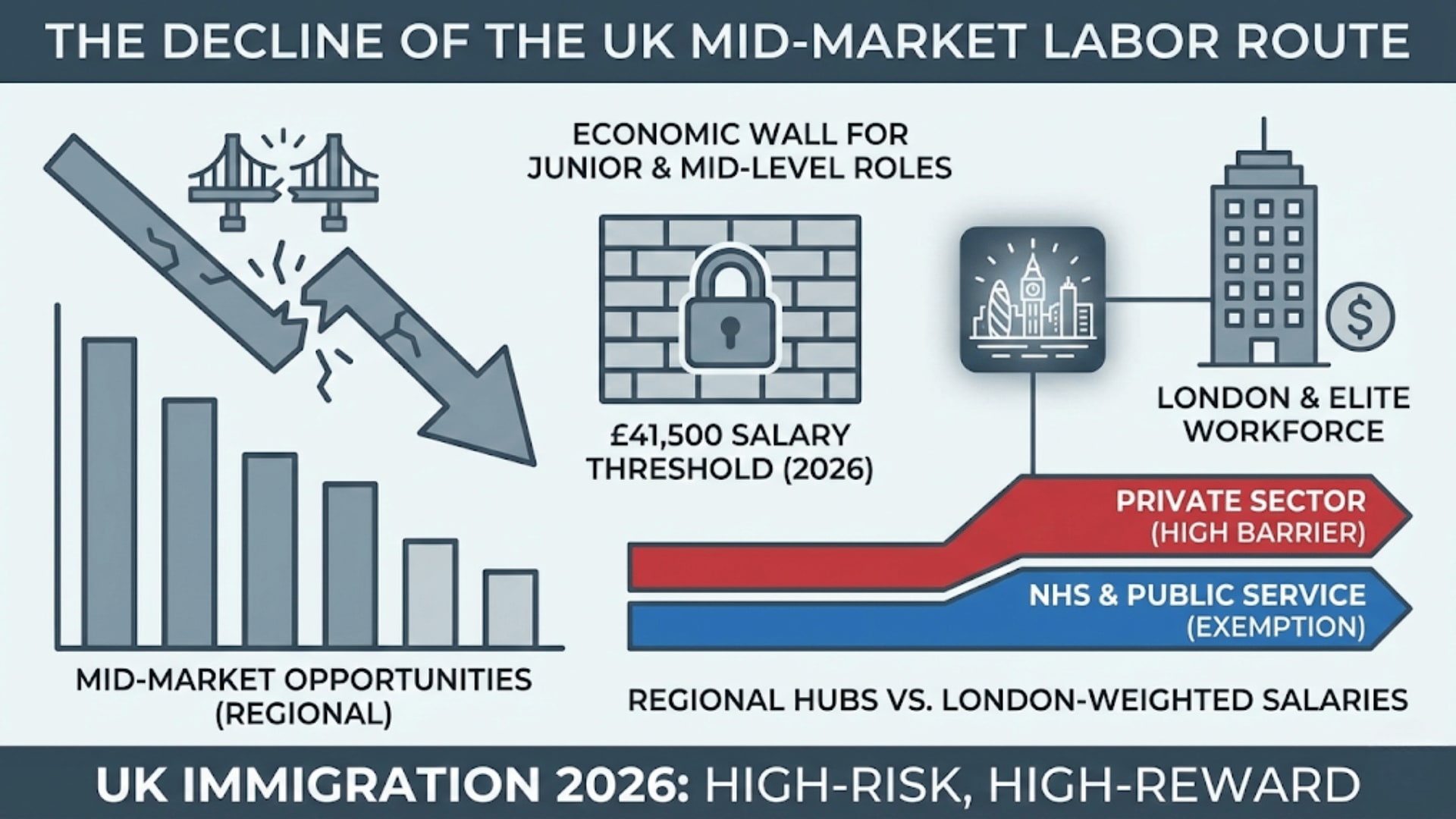
The UK's decision to keep the general salary threshold at £41,500 until 2026 has effectively closed off the path for junior and mid-level professional migrants in areas outside of cities. This number, which is based on the 75th percentile of UK earnings for eligible roles, acts as an economic wall. It makes sure that the UK is no longer a place where a lot of workers come from, but a small market for high-paid professionals. The main misconception for 2026 is that this threshold is a "floor." In fact, for many jobs in the North of England or Scotland, it is higher than the local market ceiling for senior positions.
The Immigration Policy's Focus on London
The current threshold's structural trade-off is that it forces talented people to live in London and the South East. Immigration law has hurt the "Leveling Up" agenda because companies in regional hubs can't pay the London-weighted salaries needed for the visa. In 2026, we see a trend where small and medium-sized businesses in the region have to hire people from other countries because it is no longer financially possible to sponsor them locally. This makes it hard for tech and engineering hubs in the region to find skilled workers, which used to be a big draw for people from other countries.
The Graduate Discount Gap: The "new entrant" discount is still available, but it only lasts for four years. After that, the migrant must jump to the full £41,500, which many companies are not willing to do for junior staff.
Shortage List Scarcity: The Migration Advisory Committee (MAC) has cut the "Shortage Occupation List" down to just a few jobs, which means that almost all private-sector jobs will no longer get a 20% pay cut.
The NHS Exemption: Health and care workers are still the only big group that doesn't have to meet these requirements. This makes the immigration system two-tiered, with the government putting public service ahead of private sector innovation.
The Effect on Social Integration
By making the mid-tier professional too expensive, the UK is making a temporary, elite workforce. When only the top 25% of earners can get residency, the social structure of immigrant communities changes. We are moving away from long-term, family-based settlements and toward transactional residency, where high-income people stay for 3 to 5 years and leave when they get senior management jobs elsewhere. The UK is successfully lowering the number of net migrants, but this comes at the cost of the long-term human capital that used to build the country's mid-market business sector.
To be successful in the UK market in 2026, you need more than just a job offer. You also need to negotiate a high-level salary that takes into account the immigration surcharge and the threshold. For the global professional, the UK is now a "high-risk, high-reward" destination where the administrative costs of entry demand an immediate and sustained high income to justify the investment.
Need personalized help?
Understanding visa requirements can be complex. Check out our AI-powered tools.
Explore Tools