The U.S. has put immigrant visas on hold for 75 countries for an indefinite period of time. Here's what you need to know.
Quick Summary
Quick Summary: The U.S. has put a hold on processing immigrant visas for 75 countries while it reviews "public charge" rules. This means that consulates abroad can't issue Green Cards. This suspension is very important because it doesn't apply to temporary visas (like student or work visas) and doesn't stop people who are already in the U.S. from applying for Adjustment of Status.
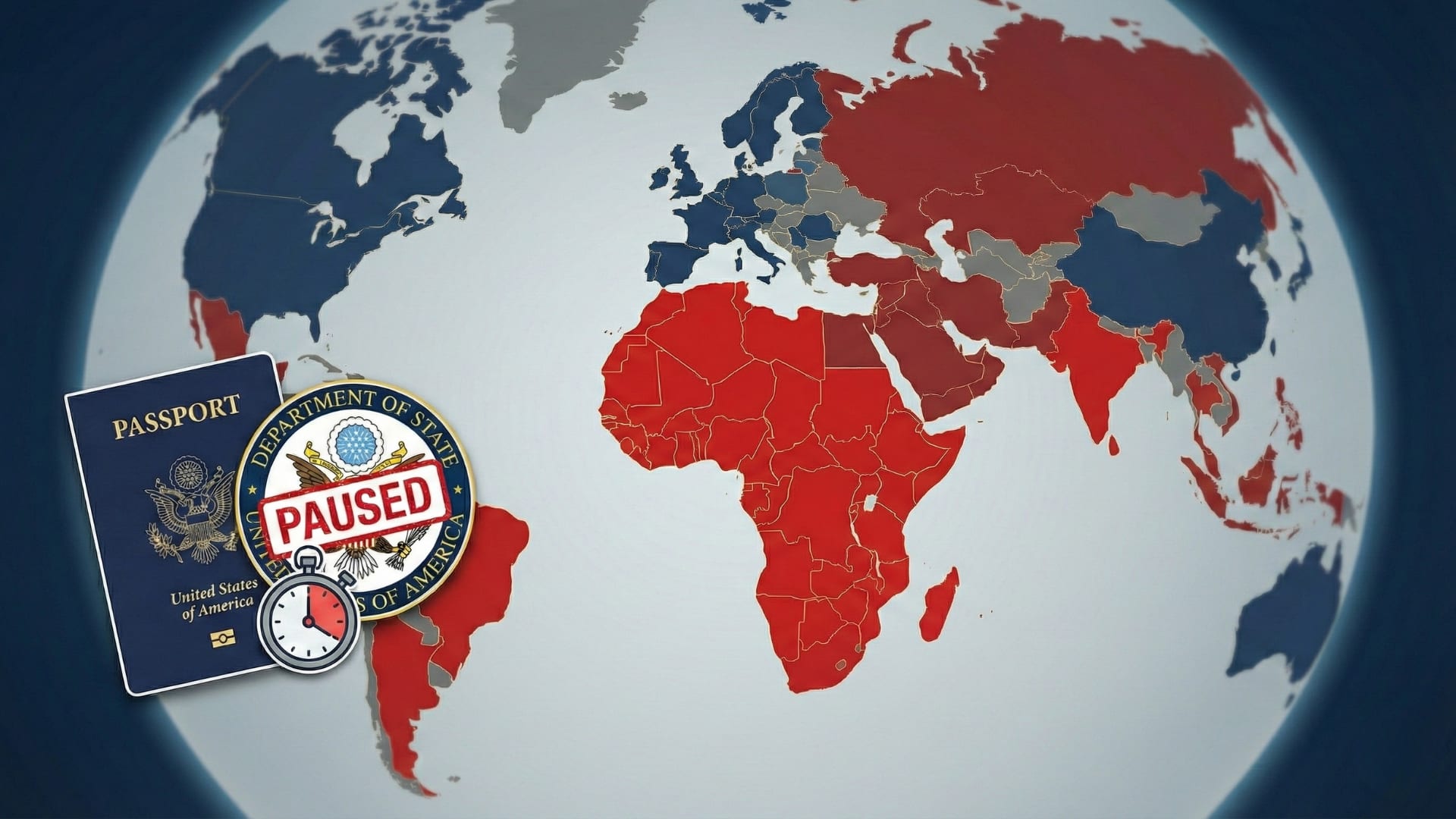
The U.S. Department of State (DoS) has officially put an indefinite pause on processing immigrant visas for people from 75 countries. This has caused a huge uproar in the global immigration community.
This new policy, which goes into effect on January 21, 2026, effectively stops the last step of the green card process for tens of thousands of applicants who are currently waiting abroad. If you or your clients are trying to get into the U.S., it's very important to understand the details of this "public charge" pause.
This full guide tells you exactly which countries are on the list, why this is happening, who is safe, and what you need to do right away.
The Main Announcement: What Just Happened?
The U.S. Department of State told all of its consulates and embassies around the world on January 21, 2026, to stop giving out Immigrant Visas (IVs) to people from 75 specific countries.
To keep people from panicking, it's important to make the language clear here:
Immigrant Visas: These are visas for people who want to live in the U.S. permanently, such as spouses of U.S. citizens, family members who are sponsored by U.S. citizens, diversity lottery winners, and Green Card approvals for jobs that were processed outside of the U.S.
The Status of the Pause: There is no end to the pause. There is no date when it will end. U.S. officials have said that the freeze will stay in place until a full review of the vetting process is done.
The "Why": The Reason for Public Charge
The idea of "public charge" is what made this decision happen.
The administration has used data to say that people from these 75 countries have used U.S. public benefits (like welfare and housing assistance) more often than people from other countries. The stated goal of the pause is to give the Department of State time to change its screening procedures so that future immigrants can support themselves and not be a burden on U.S. taxpayers.
There have been "public charge" rules for a long time, but this blanket pause on certain nationalities is a big step up in enforcement.
The List: Is Your Country on It?
The list of 75 countries is long and includes places in Africa, Asia, the Middle East, Eastern Europe, and Latin America. Here is a list of the most affected countries.
Important Additions:
Americas and the Caribbean: Brazil, Colombia, Cuba, Haiti, Nicaragua, Jamaica, Dominica, and the Bahamas.
Asia and the Middle East: Afghanistan, Bangladesh, Pakistan, Iran, Iraq, Yemen, Syria, Burma (Myanmar), and Cambodia.
Africa: Nigeria, Ethiopia, Egypt, Ghana, Kenya, Cameroon, the Democratic Republic of the Congo, Somalia, and Sudan.
Europe and Eurasia: Russia, Belarus, Armenia, Albania, and Bosnia and Herzegovina.
(Note: This is not a complete list, but it does include the main countries that send immigrants that are banned.)
India is the "surprise" exclusion.
The fact that India is not on the list is probably the most talked-about part of this announcement. Indian nationals are not affected by this specific pause, even though they are one of the biggest groups of immigrants to the U.S. Analysts think this is probably because data shows that Indian immigrants have higher median household incomes and use public benefits less often than the groups they are targeting.
Who is Safe? (The Important Differences)
A lot of the time, panic comes from being confused. If you're reading this and freaking out, see if you fit into one of the "safe" groups. This break is only for consular processing of immigrant visas.
1. Non-Immigrant Visas are NOT required
Many people will find that the most important thing to remember is that this order does not affect temporary visas.
Tourists (B1/B2): You can still apply and travel.
Students (F1/M1): You can still go to college in the U.S.
Skilled Workers (H-1B, L-1, O-1): You can still apply for work visas and stamps.
However, a word of caution: Applicants from these 75 countries should expect to be looked at more closely during interviews, even though they are not banned. To make sure you don't run out of money while you're in the country temporarily, consular officers may ask more detailed questions about your finances.
2. Adjustment of Status (USCIS) is NOT subject to this rule.
This break is for the Department of State (consulates abroad) and not for USCIS (processing in the US).
If you are already in the United States and applying for your Green Card through Adjustment of Status (Form I-485), this specific pause does not apply to you. Your process goes on as usual, following the rules in your country.
3. People with two nationalities
If you have dual citizenship, one from a country that is banned (like Brazil) and one from a country that is not (like Italy), you can probably apply using the passport of the country that is not banned.
The Effect: What This Means for You
For Families
This is terrible news for Americans who are waiting to be with their spouses, parents, or siblings from the affected countries.
The Truth: If your family member has an interview scheduled, it may not be canceled, but the visa will not be printed or issued until the pause is lifted.
The Backlog: A break of even a few months can leave a backlog that takes years to clear. Families should be ready to wait a long time.
For Employers
Companies that hire people from Brazil, Russia, or Nigeria now have a new problem.
Hiring: Right now, you can't hire someone from these countries directly on a green card.
Change in strategy: First, you need to use non-immigrant visas like H-1B or L-1 to bring the talent to the U.S. You can move forward with the green card process through adjustment of status once they are in the U.S., which gets around the consular ban.
5 Smart Things to Do Right Now
If this news affects you, don't just sit there and do nothing. Here is a plan of action:
1. Don't cancel appointments
If you have an interview with a consulate, go to it. Finish the interview and turn in your papers. The officer will probably tell you that your case is "administratively closed" or "pending" because of the pause. This keeps your place in line so that your file is ready to go when the pause is over.
2. Look into the "Inside the U.S." route
If the beneficiary can legally enter the U.S. on a dual-intent visa, such as an H-1B or L-1, they should do so. USCIS is now in charge once you get inside, and this ban does not apply there. *Warning: If you enter the country on a tourist visa with the intention of staying permanently, that is visa fraud.
3. Make the financial evidence stronger
Because the main reason for this pause is worries about "Public Charge," make sure you have all the paperwork you need. If you are applying for a student visa or waiting for this ban to end, having strong proof of your assets, savings, and health insurance will be your best defense against being denied.
4. Look for Exceptions
Be on the lookout for humanitarian exceptions. In the past, there were always exceptions made for urgent medical cases or national interest waivers.
5. Talk to a lawyer right away
Immigration law changes all the time. Things that are true today (January 25) might not be true by February. A qualified immigration lawyer can help you find other ways to get into the country, like the K-1 fiancé visa (which is often treated like an immigrant visa but has some differences) or other non-immigrant options.
Conclusion: A Game of Waiting
The Immigrant Visa Pause in January 2026 is a clear example of how quickly immigration policy can change. For people from the 75 countries that are affected, the "American Dream" has been put on hold, not necessarily stopped.
Need personalized help?
Understanding visa requirements can be complex. Check out our AI-powered tools.
Explore Tools