The $100,000 Barrier: US H-1B Recruitment Economics
Quick Summary
Quick Summary: An analysis of the September 2025 presidential proclamation mandating an additional $100,000 fee for new H-1B petitions for workers abroad.
The Economic Deterrent of the H-1B
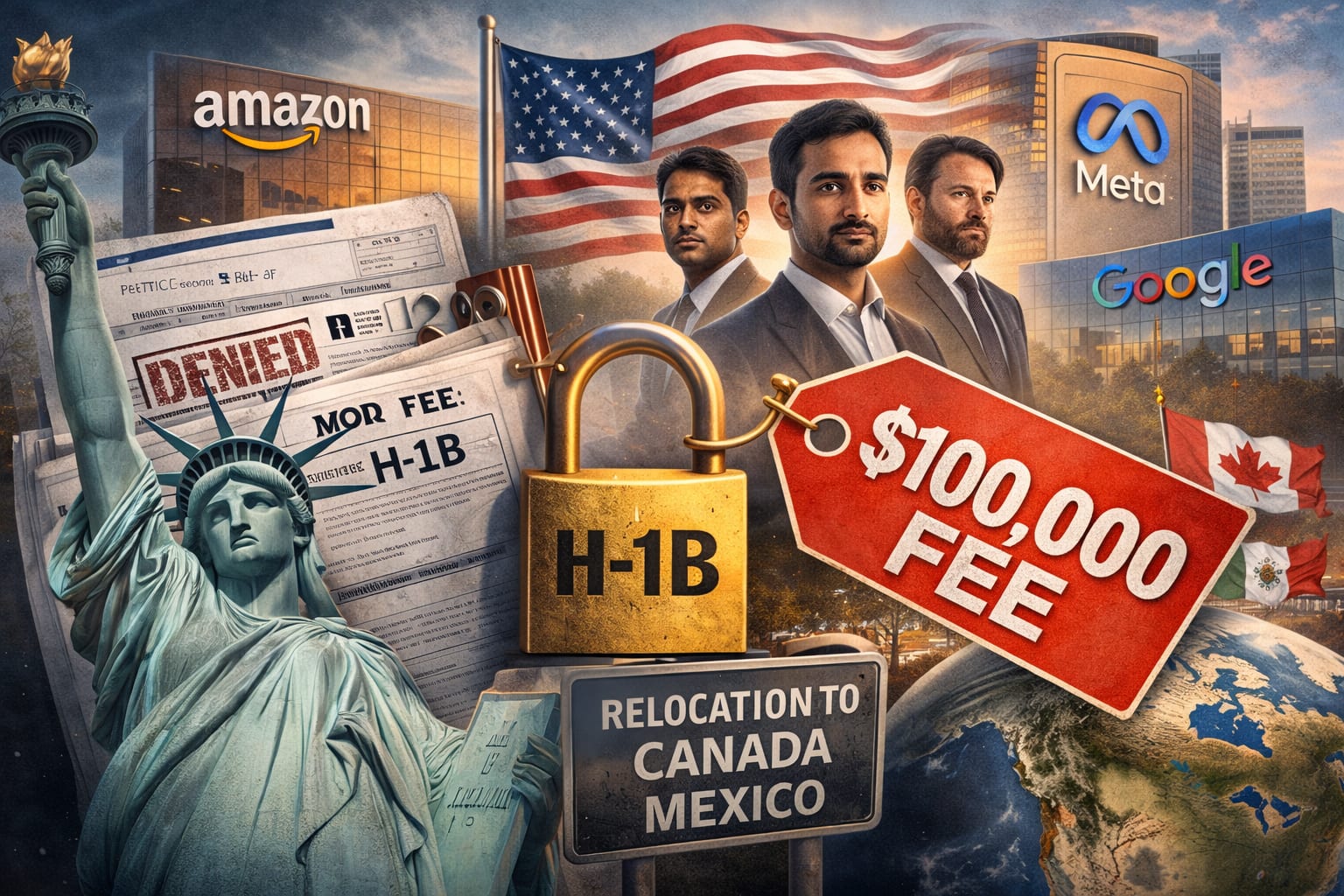
In a move that has sent shockwaves through the global tech sector, the US has implemented a new $100,000 payment for every H-1B petition involving a worker currently residing outside the United States. This fee, introduced via a late-2025 presidential proclamation, is designed to "curb misuse" and prioritize the domestic labor pool. By overnight increasing the cost of a specialized hire from a few thousand dollars to six figures, the US has effectively turned the H-1B from an recruitment tool into a luxury commodity available only to the most profitable corporations.
---The Exemptions and the "Inside-Out" Strategy
Crucially, the $100,000 fee does not apply to extensions, amendments, or change-of-status filings for individuals already within the US on other visas (such as F-1 students). This creates a massive market distortion. In 2026, we are seeing an "inside-out" recruitment strategy where US firms are exclusively targeting international students already on-shore to avoid the six-figure penalty. This has led to a hyper-competitive market for F-1 OPT holders, while talented engineers in Bangalore, London, or Berlin find themselves functionally blacklisted by all but the largest tech giants.
- National Interest Waivers: Small businesses and nonprofits can apply for a fee waiver if they can prove the hire is in the "national interest," though the approval rate for these waivers remains below 5%.
- Healthcare Impacts: Rural hospitals, which rely heavily on foreign-born doctors, are reporting a collapse in their recruitment pipelines, as the $100,000 fee often exceeds their annual recruitment budget for a single department.
- Relocation of R&D: We are seeing a 2026 trend of US firms moving entire research and development departments to Canada or Mexico to avoid the H-1B costs, a move that may inadvertently weaken the US tech ecosystem in the long run.
A Protectionist Meritocracy
The quiet policy shift here is the use of price as a filter. The government has realized that legislative caps are difficult to change, so they are using fiscal barriers to achieve the same result. The $100,000 fee is a protectionist measure disguised as a meritocratic one; it assumes that if a worker is truly "extraordinary," a firm will pay any price to bring them in. For the global professional, the dream of a US job offer now requires not just a specialized degree, but a level of senior-management value that justifies a hundred-thousand-dollar entry tax.
Need personalized help?
Understanding visa requirements can be complex. Check out our AI-powered tools.
Explore Tools