The Enforcement Escalation: Mandatory Detention in US Immigration
Quick Summary
Quick Summary: An analysis of the 2025 Laken Riley Act and the expansion of mandatory detention for undocumented immigrants charged with crimes.
The Legislative Move Toward No Bail The Legislative Move Toward No Bail
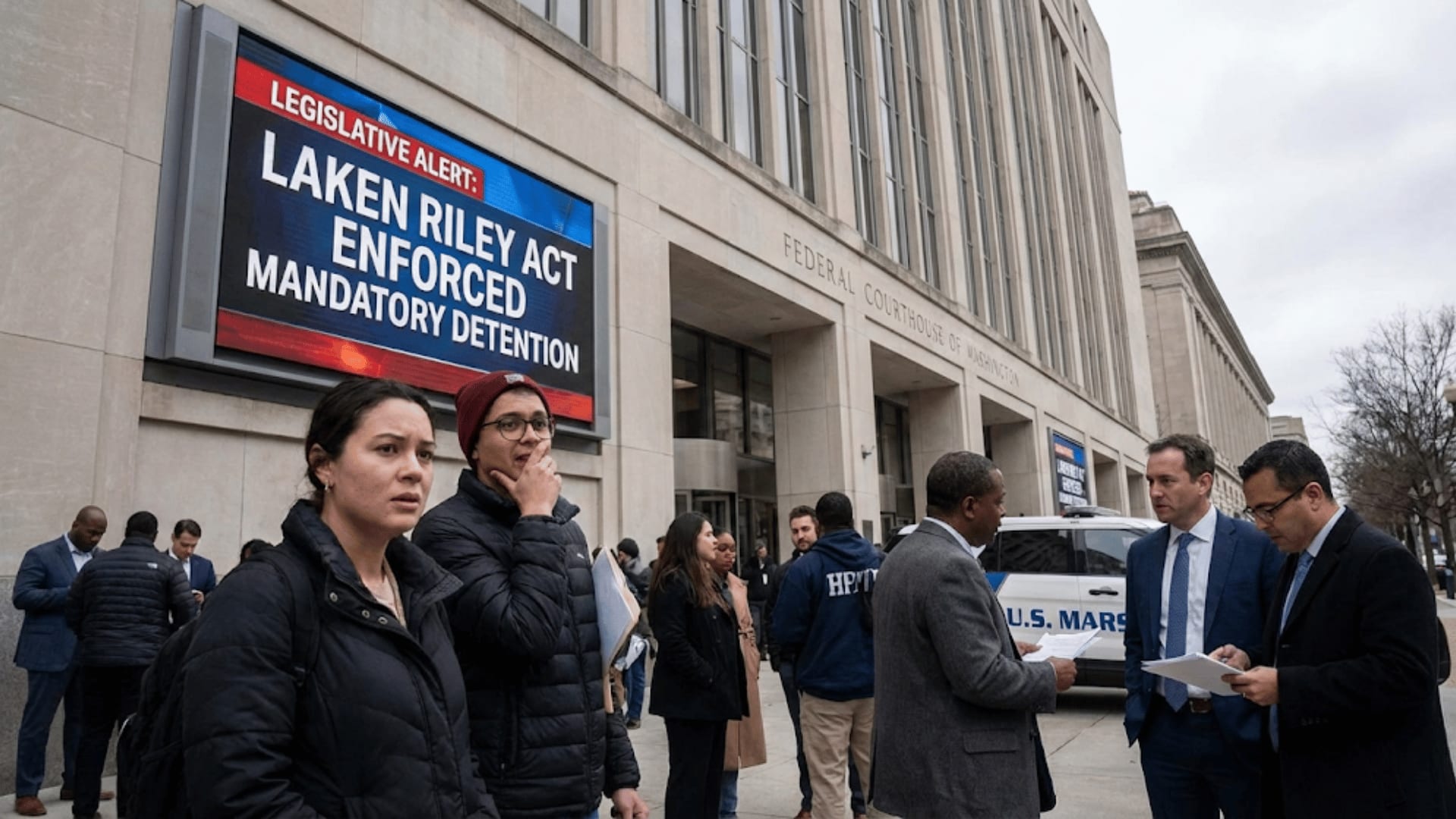
The Laken Riley Act, which went into effect in 2025, changed the way the US enforces immigration laws in 2026. The Laken Riley Act, which went into effect in 2025, changed the way the US enforces immigration laws in 2026. The law has effectively made it impossible for a lot of immigrants to get bail by requiring that any undocumented person charged with certain crimes, like theft, burglary, or assault, be held in jail. The law has effectively made it impossible for a lot of immigrants to get bail by requiring that any undocumented person charged with certain crimes, like theft, burglary, or assault, be held in jail. This is a change from the judicial discretion that used to let judges decide on a case-by-case basis how likely someone was to flee. Now, it's moving toward a system of automated incarceration based on the charge. This is a change from the judicial discretion that used to let judges decide on a case-by-case basis how likely someone was to flee. Now, it's moving toward a system of automated incarceration based on the charge.
The growth of enforcement powers The growth of enforcement powers
People often forget about how this law will affect police in states and cities in 2026. People often forget about how this law will affect police in states and cities in 2026. The Act gives state attorneys general the right to sue the federal government if they think the Department of Homeland Security isn't following the rules about mandatory detention. The Act gives state attorneys general the right to sue the federal government if they think the Department of Homeland Security isn't following the rules about mandatory detention. This has given the government a political mandate to enforce the law, which means that DHS has to put detention ahead of electronic monitoring, even when the person has strong family ties to the community. This has given the government a political mandate to enforce the law, which means that DHS has to put detention ahead of electronic monitoring, even when the person has strong family ties to the community. The system is now set up so that people who enter the criminal justice system are immediately sent to the immigration removal system. The system is now set up so that people who enter the criminal justice system are immediately sent to the immigration removal system.
The No-Bail Rule: If immigrants are charged with one of these specific crimes, they can't be released before their trial, which means they have to wait months in jail for their trial. The No-Bail Rule: If immigrants are charged with one of these specific crimes, they can't be released before their trial, which means they have to wait months in jail for their trial.
Automatic ICE Detainers: Local jails and ICE have worked together to make sure that a simple arrest for a minor theft leads to an immediate immigration hold. Automatic ICE Detainers: Local jails and ICE have worked together to make sure that a simple arrest for a minor theft leads to an immediate immigration hold.
Effect on Asylum Seekers: Asylum seekers who have pending cases are not exempt. If they are charged with a crime that qualifies, their work permit can be immediately suspended, and they must stay in detention. Effect on Asylum Seekers: Asylum seekers who have pending cases are not exempt. If they are charged with a crime that qualifies, their work permit can be immediately suspended, and they must stay in detention.
The Trade-off Between Public Safety and Due Process The Trade-off Between Public Safety and Due Process
In 2026, the enforcement environment is one where public safety talk is more important than due process. In 2026, the enforcement environment is one where public safety talk is more important than due process. While the law is intended to target "bad actors," its broad language means that individuals who may eventually be found innocent are still subjected to the trauma and financial ruin of long-term detention. The trade-off is a system that is undeniably more efficient at removal but significantly more prone to systemic injustice. For the immigrant community in 2026, the margin for error has diminished; even a minor legal entanglement can now result in permanent exclusion from the United States.
Need personalized help?
Understanding visa requirements can be complex. Check out our AI-powered tools.
Explore Tools