The $100,000 Firewall: Why 2026 is the Year of the "Inside-Out" H-1B Market
Quick Summary
Quick Summary: An unvarnished look at how the new $100k H-1B fee for offshore hires has turned F-1 OPT students into the most valuable asset in the US labor market.
If you are a specialized engineer sitting in Bangalore or London waiting for a US tech giant to sponsor your H-1B visa in 2026, I have some difficult news: the door hasn’t just closed; it has been bricked over. The recent implementation of the $100,000 supplemental fee for new H-1B petitions filed for beneficiaries outside the United States has fundamentally broken the traditional recruitment pipeline. We are no longer in a global talent market. We are in a protectionist pressure cooker.
For the last decade, the H-1B was a bridge. A company could identify talent anywhere, pay a few thousand dollars in legal fees, and bring them over. Today, that bridge has a six-figure toll. This policy change, introduced quietly via presidential proclamation late last year, was sold as a way to "prioritize American workers." In practice, it has created a bizarre market distortion that I call the "Inside-Out" recruitment model. The most valuable candidates in 2026 aren’t necessarily the most experienced; they are the ones who are already physically here.
The F-1 Student: The New Gold Standard
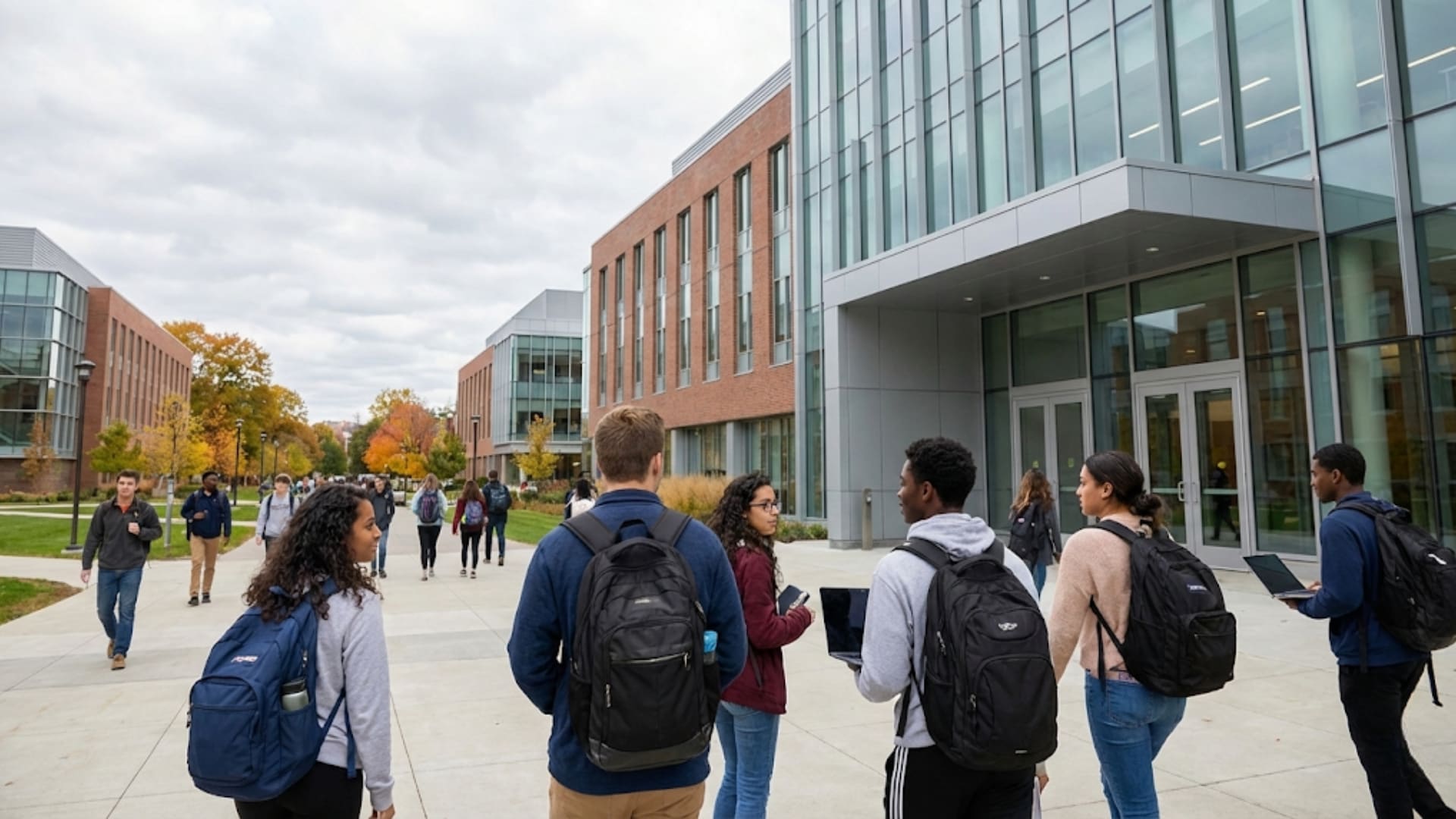
Here is the reality on the ground: US employers are terrified of the $100,000 fee. For a mid-sized software firm, hiring five developers from abroad now costs half a million dollars in fees alone—before paying a single cent in salary. But there is a loophole, and it is massive. The fee does not apply to Change of Status petitions for individuals already in the US on valid non-immigrant status, specifically F-1 students on Optional Practical Training (OPT).
This exemption has turned the international student cohort into a protected class of recruits. I spoke with a hiring manager at a Tier-2 cloud computing firm last week who explicitly told me, “If their address isn’t already in the US, don’t even show me the resume.” This is the untold story of 2026: The ROI on a US Master’s degree has skyrocketed, not because the education is better, but because it is the only remaining ticket to bypass the $100k firewall.
The Retrogression Reality Check
While the H-1B market is closing off to offshore talent, the Green Card market remains a nightmare for those from India and China. The February 2026 Visa Bulletin was released days ago, and it is a sobering document. For India-born applicants, the EB-2 and EB-3 Final Action Dates are still stuck in 2013. Let that sink in. We are nearly halfway through the 2020s, and the US government is currently processing applications for people who filed when Barack Obama started his second term.
There is a widespread misconception that "relief is coming" or that unused family visas will spill over. They won’t. The post-COVID spillover years are over. The system has returned to its statutory limits, which means a mathematical deadlock. If you are an Indian national entering the backlog today with an EB-2 priority date of 2026, you are not looking at a wait time; you are looking at a lifetime. Without legislative reform—which seems politically impossible in the current climate—the employment-based green card is functionally obsolete for new Indian entrants.
The Beneficiary-Centric Lottery: A Stabilized System
One bright spot in this chaotic landscape is the stabilization of the H-1B lottery itself. The "beneficiary-centric" selection process, fully operational for the FY 2027 season, has successfully killed the fraud schemes of the early 2020s. By tying selection to the individual passport rather than the employer registration, USCIS has curbed the "multiple filing" abuse. The selection rates have normalized, but don’t confuse "fairness" with "ease."
Because of the $100k fee for offshore hires, we expect the FY 2027 lottery to be dominated by domestic registrations. This means the competition will be fierce among F-1 students. If you are on OPT, you are competing against every other international grad in the country for a limited number of spots. The "one-shot" nature of the lottery is more stressful than ever because if you miss out, and your OPT expires, you can’t just go home and try again next year—not with the $100k fee waiting for you on the other side.
The Stalled Domestic Renewal Pilot
For those already on H-1B status, the hope of domestic visa renewal has largely evaporated. The pilot program that ran briefly in 2024 was successful technically, but political inertia has prevented its expansion. In 2026, if you need a visa stamp, you are still getting on a plane. And with the new "social media vetting" protocols fully integrated into consular processing, that trip home is riskier than before.
We are seeing an uptick in "administrative processing" (221g) delays for IT professionals returning to India for stamping. The State Department is using AI-driven tools to cross-reference your LinkedIn profile, your resume, and your petition details. If your LinkedIn says "Manager" but your petition says "Developer" to avoid wage inflation, you will be flagged. The digital border is real, and it is unforgiving.
The Only Way Out: EB-5 Rural Set-Asides
So, what is the strategy? If the H-1B is expensive and the EB-2 is frozen, where do high-net-worth professionals go? The answer, increasingly, is the EB-5 Rural Set-Aside. This is the only category that remains "Current" for all countries, including India and China.
I have seen families liquidate assets in Bangalore and Mumbai to scrape together the $800,000 investment. Why? Because it buys them a Green Card in roughly 12 months, compared to the 50-year wait in EB-2. It is a pay-to-skip model, sanctioned by Congress. The "Rural" designation is key here; these aren’t luxury hotels in Manhattan. These are solar farms in Wyoming and manufacturing plants in rural Georgia. The risk is higher, but the immigration reward is immediate. In 2026, the EB-5 isn’t an investment product; it’s a freedom product.
The Verdict for 2026
The US immigration system in 2026 has shed any pretense of being a global charity. It is a ruthless, transactional market. If you are outside the US, the entry price is $100,000. If you are inside, the competition is fierce. And if you are waiting for a Green Card, the line is frozen.
My advice? If you are a student, protect your OPT status with your life. It is your most valuable asset. If you are a professional abroad, stop applying to random LinkedIn ads; target US companies with established subsidiaries in your country and aim for an L-1 transfer, which avoids the H-1B cap and fee issues. And if you have the capital, stop waiting for EB-2 and look at EB-5. The "American Dream" is still alive, but in 2026, it is strictly a pay-per-view event.
Need personalized help?
Understanding visa requirements can be complex. Check out our AI-powered tools.
Explore Tools